
Eifel, Trier & Region
Overview of the property market in Eifelkreis Bitburg-Prüm
Anyone selling or buying a property here rarely makes the decision based on square metres and purchase price alone. It is about family, commuting, future plans and often a home that has been part of their life for many years.
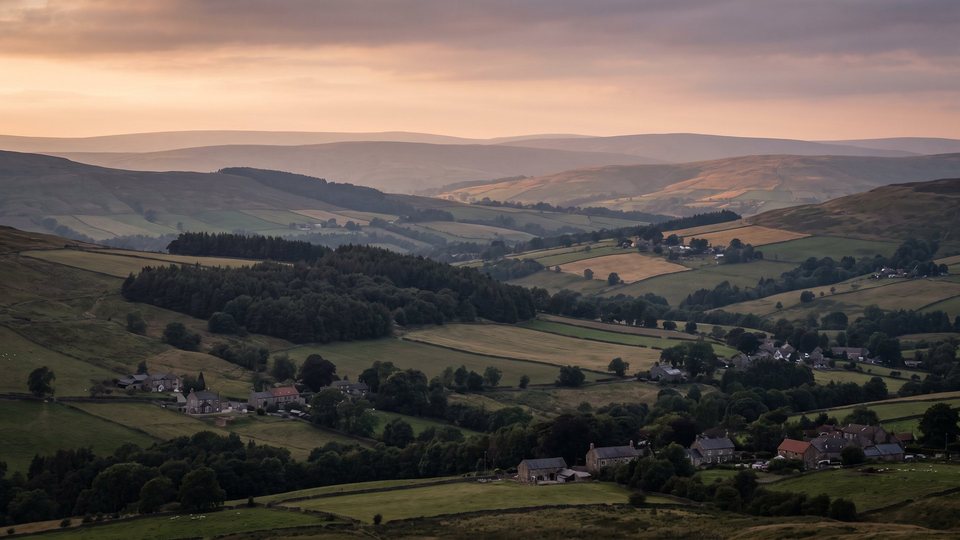
An impression relating to the subject, generated with artificial intelligence. It shows no specific building and is not a photograph of one of our properties.
Article L-0133 · 20.10.2026 · 7 min. reading time · Joé Christian Ewrard
How is the property market in the Eifelkreis structured?
The property market in the Eifelkreis Bitburg-Prüm is not a uniform market. Bitburg operates differently from a small village in the southern Eifel. A well-connected municipality near the Luxembourg border appeals to different buyers than a remote farmstead or an older residential property near Prüm.
Living space, plot size and year of construction are therefore not the only deciding factors. Buyers pay close attention to how easily they can reach their workplace, as well as shopping facilities, schools, medical care and the location's suitability for everyday life. The distance to the nearest major road can also play an important role.
There is also a wide range of property types. The regional market includes traditional detached houses, former farmhouses, modernised existing properties, building plots, apartment buildings and properties with outbuildings. Some houses offer plenty of space and a large plot but require substantial investment. Others are smaller but can be occupied at short notice and are easier to finance.
A realistic assessment must therefore always consider the specific submarket. An average figure for a large district is of limited use to an owner if the particular characteristics of their house and location are not taken into account.
Who buys property in the Eifel?
People from the region are an important group of buyers. They know the local communities, have family ties and can realistically assess distances. They often look for a home of their own because their circumstances are changing: their family is growing, their flat has become too small or their desire for a garden, peace and quiet, and a dedicated study is becoming stronger.
Commuters are also interested in locations with convenient connections to Trier or Luxemburg. For these buyers, a house is not automatically attractive simply because it is in a quiet location. They examine the daily journey, possible alternative routes and whether work, childcare and leisure activities can be organised reliably.
People returning to the region also play a role. Some initially move elsewhere for vocational training, university or work and later want to live closer to their parents, friends or home town again. These buyers often search very specifically. Location, proximity to family and familiar surroundings may be more important to them than particularly modern features.
Other prospective buyers deliberately seek a rural setting. They want space, nature or opportunities to keep animals, have a workshop and pursue hobbies. In practice, there is often a difference between what people want and what everyday life entails: a large plot may initially sound appealing, but it requires maintenance. A historic house has character but may raise structural issues. Good marketing openly addresses both sides.
Who sells and why?
Many sales result from a normal change in the stage of life. A detached house becomes too large once the children have moved out. Stairs become difficult to manage. Gardens and outbuildings require more effort than they used to. Owners then ask themselves whether a smaller home in Bitburg, Prüm, Trier or a well-served location would be a better fit for their future daily life.
Another common reason is an inheritance. In this situation, financial, emotional and family matters converge. One family member wants to keep the family home, while another wants to sell it. There are differing views on its value. At the same time, documents must be located, rooms cleared out and decisions made jointly.
A separation, a career change or a move can also prompt a sale. In such situations, time pressure is often high. This is precisely when the asking price should not be set too low out of fear or too high out of hope. Both can have disadvantages.
Owners also sell properties that are due for modernisation. Some no longer wish to organise the work themselves. Others cannot or do not want to bear the required investment. Such a property may nevertheless be suitable for buyers if its condition, the work involved and the possibilities are presented clearly.
What distinguishes the rural market from the city?
In a city, many locations can be compared with one another over short distances. In the Eifelkreis, just a few kilometres can make a significant difference to everyday life. A property may be in a quiet and scenic location, while also involving longer journeys to school, the doctor, shops or work.
The time required to market a property cannot simply be inferred from urban experience either. In rural submarkets, the number of suitable prospective buyers may be more limited, depending on the property. On the other hand, some buyers specifically seek features that are rarely found in the city: large plots, outbuildings, distance from neighbours or space for several generations.
Another difference concerns the condition. In the city, the location alone may generate broad demand. In rural areas, buyers often scrutinise particularly closely whether the purchase price and required investment are in proportion. The roof, heating system, windows, damp, energy efficiency and potential alterations strongly influence the decision.
It is therefore not enough to present a rural house like a city apartment. Prospective buyers need answers to practical questions. What is the access like? Which rooms are actually included in the living area? How are the outbuildings used? Which documents are available? Where are there evident modernisation needs? Although transparency cannot prevent every rejection, it does reduce later surprises.
What role do Trier and Luxembourg play?
The Eifelkreis does not exist in isolation. Employment, education, amenities and leisure connect it with Trier, Trier-Saarburg, the Vulkaneifel and Luxemburg. These links affect which places are of interest to particular buyers.
For professionals working in Luxemburg, access to the border may be more important than proximity to the nearest larger German city. By contrast, those who regularly travel to Trier assess different transport routes and residential locations. Working from home can broaden the search radius, but does not eliminate the commute in every profession.
From the seller's perspective, this means that a property should not be described solely in terms of its municipality. What matters is the type of everyday life for which the location is suitable. A quiet place to live can be very suitable for a family if childcare, school and the commute work well. For another prospective buyer, the same location may be impractical.
PRIOCASA operates in the Eifelkreis Bitburg-Prüm, in Trier and Trier-Saarburg, in the Vulkaneifel and along the border with Luxemburg. This region in particular demonstrates how strongly demand develops along people's individual routes. A well-founded assessment therefore combines property features with local knowledge of the region.
How is the market developing without reliable average figures?
Market trends are not reflected in price statistics alone. They can also be seen in the questions buyers ask, which financing arrangements appear viable and which properties lead from viewings to serious negotiations.
Today, buyers look closely at the total cost involved. In addition to the purchase price, they consider modernisation, ongoing costs and potential reserves. A house with a low asking price is not necessarily inexpensive if major works have not been clarified. Conversely, a well-maintained property may be easier to budget for despite a higher starting price.
For sellers, this means that clear and verifiable information is becoming more important. Missing floor plans, unverified floor areas or contradictory details undermine trust. A well-prepared property can be assessed more objectively. Prospective buyers can decide more quickly whether it suits their budget and plans.
Without reliable data for the specific location and type of property, no one should derive a price from general headlines. Neither nationwide reports nor experiences from Trier can be applied without adjustment to a village in the Eifelkreis. The key factors are comparable listings, actual observable demand, condition, immediate surroundings and usability.
Why do sales fail despite existing demand?
A common reason is an asking price based primarily on the owner’s personal expectations. Memories, personal contributions and previous investments have considerable personal value. However, buyers assess the property as it is today, its location and the work that remains to be done.
Starting with an excessively high price can result in suitable prospective buyers not arranging a viewing at all. If the property remains listed for a long time, doubts arise. Later price adjustments are then sometimes interpreted as a sign of defects or pressure to sell. A deliberately low price is also risky if it creates expectations that do not align with the intended sales strategy.
Sales can also stall when important information only emerges at a late stage. Unclear ownership, missing documents or undocumented alterations can unsettle buyers and financing banks. Legal matters should be clarified with a notary or lawyer. A tax adviser is the appropriate point of contact regarding tax implications.
Finally, some plans fail because of poor communication. If a prospective buyer only learns after the viewing that substantial renovation is required, trust declines. Honest information does not automatically deter buyers. It helps reach those buyers whose plans genuinely suit the property.
How can owners prepare to make a sound decision?
The first step is not to list the property immediately. The reason for the sale, timeframe and family interests should be clarified first. In the case of a community of heirs, it is advisable to establish at an early stage who will coordinate decisions and what expectations exist. This will not prevent every conflict, but it makes potential issues apparent before prospective buyers become involved.
This is followed by an objective assessment of the current situation. Which documents are available? Which floor areas are documented? What modernisation work has been carried out? Which defects are known? The more clearly these questions are answered, the more reliable the valuation will be.
A regional market price assessment should explain how it was reached. Owners should be able to understand which features support the value and which limit demand. A reputable assessment remains an assessment. It cannot guarantee either a specific sale price or a fixed timeframe.
Only then should the marketing strategy be defined. It covers the appropriate target group of buyers, how the location is presented, the selection of meaningful information and a realistic approach to enquiries. This turns an emotional undertaking into a structured process.
If you are considering selling, start by taking stock rather than forming an idea of the price: Gather the available documents, note any modernisations and outstanding questions, and clarify who is involved in the decision. A regional assessment can then show which buyers may be interested and which marketing approach suits your property in the Eifelkreis, around Trier or near the border with Luxemburg.
Frequently Asked Questions
Is a house in the Eifelkreis more difficult to sell than one in Trier?
Not necessarily. However, demand depends more heavily on the specific location, accessibility and condition. A house with a clearly defined target group and realistic positioning can be readily marketable, while an unsuitable asking price makes the sale more difficult.
Are properties near the border with Luxemburg automatically in greater demand?
Proximity to the border can be an advantage for commuters. However, the actual transport links, daily travel time and the property's features remain decisive. The location should therefore be assessed from the perspective of future day-to-day life.
Should I modernise before selling?
That depends on the costs, condition and target buyers. Minor repairs and a well-maintained presentation can be worthwhile, while larger projects do not automatically pay off before a sale. Before making a decision, the effort involved and the expected impact should be assessed individually.
How can I determine a realistic asking price without relying on average prices?
A valuation takes into account the immediate surroundings, plot, building fabric, usability, level of modernisation and demand for comparable properties. General online estimates are often insufficient for this. What matters is a clear rationale rather than merely a price figure.
What should be done first with an inherited property?
First, the ownership situation, documents and expectations of everyone involved should be clarified. A notary or lawyer can assist with legal questions, and a tax adviser with tax matters. The property can then be objectively valued and the next steps agreed.
Topics: property market Eifelkreis Bitburg-Prüm, estate agent Eifel, selling a house in Bitburg, property in Trier, Luxemburg border region, property valuation Eifel, rural property market
Responsible for this article: Joé Christian Ewrard — Owner & Real Estate Agent IHK, PRIOCASA Immobilien & Finanzservice. Last updated: 20.10.2026. The draft was prepared with the support of artificial intelligence and reviewed and approved prior to publication (AI Transparency). This post does not replace legal or tax advice; for individual questions, please contact a notary, lawyer, or tax advisor.
The next step
How is your location currently positioned?
Local knowledge is not incidental when determining the price. Ask us about your street.
Fits well
Selling & Marketing
Selling a house in Konz: process, price and timeframe
Selling a house in Konz: Find out how to safely prepare the price, documents, marketing, notary appointment and handover, without un
Law, Notaries & Taxes
Property purchase agreement: These clauses matter
Which clauses in the property purchase agreement protect you? How to check handover, warranties, withdrawal and the payment due date before d
Law, Notaries & Taxes
Check the registers of contaminated sites and public-law building obligations before buying
Contaminated sites and building encumbrances can affect use, financing and value. Find out which registers buyers before the property
All about homeListing
What is different at a new address
Network charges, the level of infrastructure development and the regional classification depend on the location, not the provider.
 Listing. The comparison is conducted by Verivox, not PRIOCASA. If a contract is concluded through this, we receive a commission — the price remains the same for you. Nothing is transmitted before you click; what happens afterwards is explained in our
Privacy Policy.
The next step
One conversation is enough.
No marathon of forms, no waiting on hold. Call or write to us – you will speak directly with the people handling your request.