
Buying & Financing
House-buying checklist for the viewing
During a house viewing, hope and concern compete with each other. While you are already imagining everyday life in the rooms, the question remains: Am I overlooking a defect that could later prove costly or burdensome?
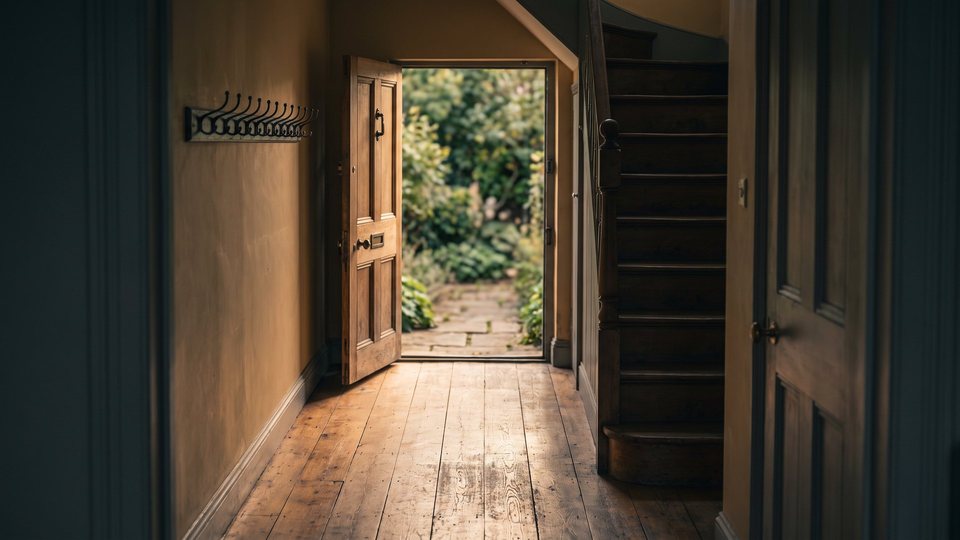
An impression relating to the subject, generated with artificial intelligence. It shows no specific building and is not a photograph of one of our properties.
Article L-0093 · 05.10.2026 · 7 min. read · Joé Christian Ewrard
What you should prepare before the viewing
A good viewing begins before the appointment. Ask for floor plans, the living space calculation, the energy performance certificate and an overview of known modernisation work. Documents relating to extensions, alterations, work on utility lines and previous damage are also of interest. Missing documents do not necessarily have to be grounds for ruling out the property. However, this is something that should be clarified.
Make a note in advance of what is important for your decision. This includes more than just the rooms and living space. Consider moisture, heating, utility lines, windows, the roof, site drainage and potential for further development. This will make you less likely to be distracted during the appointment by attractive furnishings or freshly painted walls.
Whenever possible, view a house in daylight. Open doors and windows, look behind curtains and large pieces of furniture if the owner agrees, and make sure to inspect the basement, attic, garage and outdoor areas carefully. You should only take photos with permission. They will help you compare your impressions objectively later.
An initial viewing is intended to provide an overview. If the house remains a serious option, arranging another appointment with an independent building surveyor is advisable. This applies particularly to older buildings, visible moisture, unclear alterations or missing documentation.
Inspecting the basement: identifying moisture and assessing it correctly
In the basement, you should begin by checking the smell. A musty or earthy smell may indicate moisture, even if the walls currently appear dry. Look out for dark discolouration, flaking plaster, efflorescence, rust on metal components and warped wall coverings. Fresh paint on individual sections of wall is not proof of concealed damage, but it should prompt a specific question.
Pay particular attention to sections of wall close to the floor, external corners and the areas around basement windows and pipe penetrations. Ask whether water enters after heavy rain, whether there has already been any backflow and whether drainage, waterproofing or a pump is in place. The key issue is not only whether moisture has occurred in the past, but why it occurred and how it was addressed.
A basement in an older house does not have to meet the same standards as a modern living space. Due to their construction, historic basements may be cooler and more humid. It becomes problematic if this is incompatible with the intended use, load-bearing components are affected or the cause remains unclear.
Hillside locations, varying soil conditions and locally high levels of rainfall play a particularly important role in the Eifel. In the Eifelkreis Bitburg-Prüm, the Vulkaneifel and the area around Trier, the slope of the land, surface water and drainage should therefore be considered together. A dry wall on a sunny viewing day reveals little about what happens after prolonged rainfall.
Inspecting the roof: look beyond missing tiles
First, inspect the roof from the outside. Does the roof surface appear even? Are any tiles displaced, damaged or visibly different? Are there any conspicuous areas around the chimney, dormers, roof windows, gutters or downpipes? Such junctions are particularly susceptible because different components and waterproofing systems meet there.
In the attic, look for signs of light, water stains, dark discolouration and a musty smell. Also inspect the rafters, roofing membrane and insulation. A dry area may still indicate older damage. Therefore, ask whether the roof has ever leaked and whether any repairs are documented.
It is important to distinguish between the roof covering, supporting structure, insulation and interior finish. A roof that looks to be in good condition may still be outdated in terms of energy efficiency. Conversely, an older roof covering does not automatically mean that a complete replacement is needed immediately. Its condition must be assessed by a professional.
Ask when previous work was carried out and what it involved. Was only the roof covering replaced, or was insulation also installed? Were roof windows, connections and drainage included? Invoices, photos and contractors’ documents are more informative than the blanket statement that the roof was done.
Checking the condition and operation of windows and doors
Open and close several windows. The sashes should move without unusual effort and close properly. Look for damaged seals, condensation between the panes, discoloured frames and draughts. Also check the shutters, external doors and patio doors.
Moisture on the inside of a window does not always have the same cause. It may be related to ventilation, room temperature, thermal bridges or the condition of the window. Black spots on window reveals or in the corners of rooms should not be assessed hastily, but neither should they be ignored.
Ask which windows were replaced and when, and whether all components are of the same standard. In some houses, modernisation work was carried out gradually. As a result, appearance, thermal insulation and working condition may vary from room to room.
New, highly airtight windows also change the interaction between ventilation and the building envelope. If they were installed in an older house, it should be clarified whether ventilation, insulation and possible thermal bridges were considered at the same time. Individual measures are not necessarily a problem. However, they must be suitable for the building.
Checking utility lines: what you need to look at and what you need to ask
For water pipes, the material, age, routing and visible repairs are important. Inspect pipes in the basement, boiler room and beneath accessible sinks. Greenish deposits, rust, drip marks or multiple repair sections warrant attention. Also ask about fluctuating water pressure, long waits for hot water and previous burst pipes.
With permission, briefly run several taps and observe how the water drains. Gurgling noises or slow drainage may have various causes. A viewing is no substitute for inspecting the pipes, but it can provide pointers for further questions.
When assessing the electrics, new switches and sockets are not the only things that matter. What lies behind them is crucial. Look at the fuse box and ask about replacements, extensions and inspection reports. A modern switch provides no indication as to whether the wiring, protective devices and circuits are up to date.
Ask whether there have been repeated outages, whether individual rooms were converted at a later date and whether high-power appliances can be operated without problems. If there are any doubts, electrical installations and wiring should be assessed by a specialist company. Improvised extension leads, loose covers or conspicuous junction boxes are clear reasons to take a closer look.
Which questions sellers should answer specifically
Do not just ask whether something is in order. Ask for specific details. When did the damage occur? What was the cause? Who repaired it? Are there invoices, photos or reports? Was only the visible damage addressed, or was the cause addressed as well?
The property’s history of use is equally important. Was the house vacant for an extended period? Were the rooms consistently heated and ventilated? Were there pets, water damage, a fire or a pest infestation? Were the basement or attic used differently from how they are presented today?
Clarify which work was carried out by the owners themselves and which specialist contractors were involved. Work carried out by the owners is not necessarily defective. Without documentation, however, it may be more difficult to understand how the work was performed and how the structure was built up.
Also ask about any planned or known measures in the surrounding area, rights of way, utility easements, public-law encumbrances and any special features of the property. For legal matters, do not rely solely on verbal statements. The documents required and how entries should be assessed should be clarified on a case-by-case basis with a notary, lawyer or the relevant authority.
Assessing warning signs correctly without withdrawing prematurely
Almost every previously owned house has weak points. The key question is not whether you find a defect, but whether its cause, extent and consequences can be understood. A visible crack may be superficial or may require further investigation. A stain may be old and dry or may indicate an ongoing problem.
You should be cautious if answers repeatedly remain evasive, important rooms are inaccessible or documents are not provided despite specific requests. Strong masking odours, an unusual amount of fresh paint in isolated areas or dehumidifiers running continuously also warrant an explanation.
At the same time, do not let every cosmetic flaw unsettle you. Worn floors, older sanitary fixtures or dated surfaces should be assessed differently from damp, structural damage or unclear pipework. This distinction protects against two common mistakes: rejecting a sound house because of its appearance or overlooking technical risks because of attractive furnishings.
An estate agent can obtain information, compile documents and clarify outstanding points between the parties involved. They are not a substitute for a technical inspection. The mark of professionalism is therefore not claiming that a house is free of defects, but dealing transparently with what is known, visible and still needs to be inspected.
Reaching a well-founded decision after the viewing
Do not make your decision in the doorway. Immediately after the appointment, write down what you noticed. Separate observations, statements and assumptions. A water stain is an observation. The statement that it resulted from previous damage is information. Whether the cause has been permanently remedied may still need to be investigated.
Request any missing documents and submit outstanding questions in writing. This reduces misunderstandings. If you are seriously interested in buying, a qualified professional should inspect the technically relevant aspects. This is particularly important if renovation work appears necessary or the purchase price leaves little financial room for unexpected costs.
Also discuss any planned work with your financing adviser. Not every identifiable measure has to be carried out immediately, but necessary expenditure should be included in a realistic overall assessment. In addition to the purchase price, the condition of the house, available reserves and your personal risk tolerance all matter.
For tax, legal or contractual questions, consult a tax adviser, lawyer or notary. A sound purchase decision does not result from eliminating every risk. It results from identifying, investigating and financially assessing the key risks.
Take this house-buying checklist with you to the viewing and mark all outstanding points afterwards. Request supporting documentation, arrange a second appointment if you are seriously interested and have any conspicuous building components professionally inspected. PRIOCASA helps buyers in the Eifelkreis Bitburg-Prüm, Trier and Trier-Saarburg, the Vulkaneifel and along the border with Luxemburg to compile the documents and questions for the next step in an organised manner.
Frequently Asked Questions
Should I bring a surveyor to the first viewing?
This is not always necessary during the initial assessment. If the house is being seriously considered, there is visible damage or documents are missing, a further appointment with an independent building surveyor is advisable. They can assess suspicious areas professionally and identify what needs to be inspected.
How can I tell whether a basement is damp?
Look out for a musty smell, discoloration, efflorescence, flaking plaster and traces of rust. Ask about water ingress during heavy rain, previous damage and any waterproofing work carried out. The cause should be professionally assessed before you evaluate the consequences or the work involved.
Is a fresh coat of paint sufficient evidence of renovation?
A fresh coat of paint initially improves the surface. It does not indicate whether moisture, cracks or other causes have been investigated. Ask why it was painted and whether there are any photographs or documents showing its previous condition.
Which documents are particularly helpful for the roof and utility lines?
Invoices, specifications of work, inspection reports, photographs and details of the specialist contractors involved are helpful. They should indicate which components were actually worked on. A statement such as “everything replaced” is too vague without details of the scope and supporting documentation.
What should I do if the seller cannot answer a question?
Record the question in writing and ask for documents or an answer at a later date. A lack of knowledge is not automatically a warning sign, but an unresolved technical or legal question remains a risk. Have important points checked by the appropriate specialist before making a binding decision.
Topics: house purchase checklist, house viewing, property purchase Eifel, basement damp, check roof, check windows, check utility lines, property financing
Responsible for this article: Joé Christian Ewrard — Owner & IHK-certified estate agent, PRIOCASA Immobilien & Finanzservice. Last updated: 05.10.2026. The draft was created with the support of artificial intelligence and reviewed and approved prior to publication (AI Transparency). This post does not replace legal or tax advice; for individual questions, please contact a notary, lawyer, or tax advisor.
The next step
Are you currently searching?
Tell us what has to fit. We will contact you before a property goes online.
Fits well
Buying & Financing
Buying land and building: What must be clarified beforehand
Check a building plot with confidence: How to clarify the development plan, site servicing and preliminary building application before buying and avoid costly mistakes b
Buying & Financing
Buying an older property: identifying cost traps and carrying out the right checks
Buying an older property without nasty surprises: How to identify risks involving damp, electrics, structural integrity and the roof, and plan inspections and
Buying & Financing
Financing fell through: What property buyers can do
What applies before and after the notary appointment, what risks arise, and how buyers can secure their property financing reliably and in good time a
All about homeListing
When you move in
Electricity, internet, and insurance for your own house can be arranged before the handover of the keys.
 Listing. The comparison is conducted by Verivox, not PRIOCASA. If a contract is concluded through this, we receive a commission — the price remains the same for you. Nothing is transmitted before you click; what happens afterwards is explained in our
Privacy Policy.
Listing. The comparison is conducted by Verivox, not PRIOCASA. If a contract is concluded through this, we receive a commission — the price remains the same for you. Nothing is transmitted before you click; what happens afterwards is explained in our
Privacy Policy.
The next step
One conversation is enough.
No marathon of forms, no waiting on hold. Call or write to us – you will speak directly with the people handling your request.