
Selling & Marketing
Conducting viewings properly: process and mistakes
For property owners, a viewing is rarely just an appointment. Strangers inspect their home, ask critical questions and may influence the next chapter of their lives. Good preparation prevents unnecessary stress and helps prospective buyers make an informed decision.
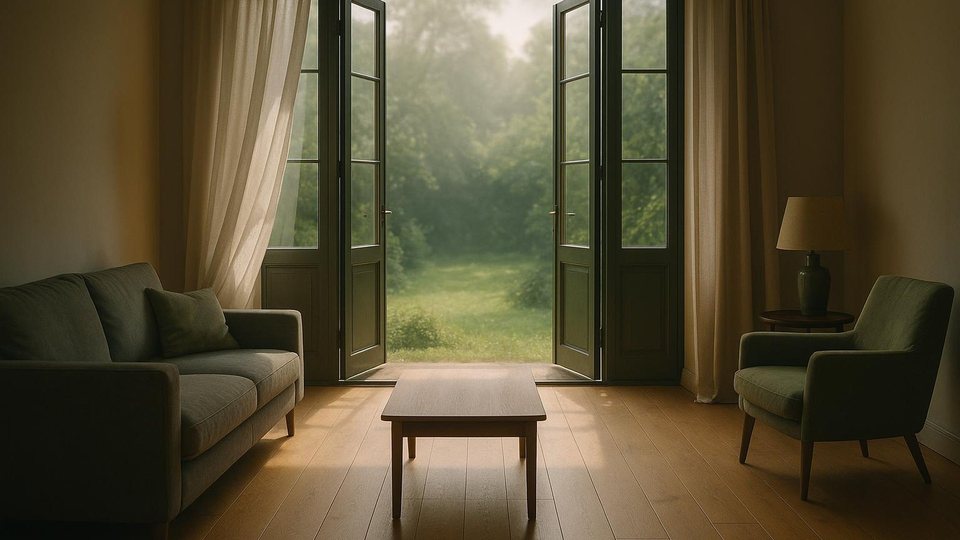
An impression relating to the subject, generated with artificial intelligence. It shows no specific building and is not a photograph of one of our properties.
Article L-0023 · 08.09.2026 · 7 min. read · Joé Christian Ewrard
How Many Viewings Are Advisable?
There is no definitive answer. The aim is not to show the property to as many people as possible. The key is to invite suitable and adequately prepared prospective buyers. Numerous unqualified appointments take up time, increase the burden and do not reliably move the sale forward.
Before inviting someone to a viewing, it should therefore be established whether the property is generally in line with the prospective buyer's expectations. This includes the location, purchase price range, size, condition and planned move-in date. The financing should also appear plausible, at least. Full confirmation of financing is not always available at the initial point of contact. However, a serious prospective buyer can usually explain how the purchase is to be financed and whether they have already spoken to a bank.
Too few viewings can also be problematic. Anyone who immediately stops engaging with all other contacts after the first pleasant conversation becomes unnecessarily dependent. Prospective buyers may change their minds, fail to secure financing or choose another property. A verbal commitment does not yet constitute a guaranteed sale.
In practice, a manageable series of well-prepared individual appointments is often more advisable than an open house with people coming and going. The actual number of appointments required depends on the property, demand, price positioning and feedback. If there are no serious enquiries, simply arranging more viewings is not the answer. In that case, the presentation, documentation, target audience or pricing strategy must be reviewed.
Individual Appointment or Group Viewing?
Individual appointments provide a calm setting. Prospective buyers can take a closer look, ask personal questions and discuss their impressions openly. This is particularly helpful for detached houses, occupied properties, older buildings and floor plans that require explanation. Property owners also gain a clearer picture of how serious the interest in purchasing is.
Group viewings can reduce the organisational burden when there are a great many suitable enquiries. However, they involve risks. Visitors feel that they are being watched, important questions remain unasked and rooms can quickly feel unsettled. Some prospective buyers feel pressured by other visitors. Others withdraw for precisely that reason.
Creating artificial competition is not a good sales strategy. Claims about supposedly numerous other buyers or the alleged need to conclude the sale immediately undermine trust. If there are genuinely several prospective buyers, this should be communicated objectively and transparently.
Individual appointments are usually easier to manage for occupied houses and apartments. Personal belongings remain better protected, and it is easier to keep track of who is where. If appointments are grouped together, visitors should be given sufficient space one after another. A viewing is not an event, but a careful assessment of a major decision.
How Long Should a Viewing Take?
A good viewing takes as long as the property and the prospective buyer's questions require. A small, vacant apartment can be assessed more quickly than a house with a basement, garage, garden, outbuildings or a need for modernisation. A rigid time limit creates either idle time or time pressure.
Viewings that are too short can seem evasive. Prospective buyers may then wonder whether certain areas are deliberately not being shown. At the same time, the first viewing does not need to resolve every technical detail conclusively. Your aim is to provide a realistic overall impression. If there is serious interest, a further appointment can follow, if necessary with a surveyor or another qualified professional.
There should be sufficient time between two appointments. Delays, lengthy questions or a tour of the grounds should not result in the next prospective buyer already waiting at the door. Such an encounter can create pressure and is unpleasant for both sellers and buyers.
Travel and location also play a role. In the Eifelkreis Bitburg-Prüm, the Vulkaneifel and along the border with Luxemburg, prospective buyers often travel from farther afield. In Trier, by contrast, simply finding a parking space can delay the start. Clear directions, information about access and realistic scheduling help avoid a poor start.
What Needs to Be Prepared Before the Appointment?
The property should be clean, well ventilated and easy to walk through. The aim is not to stage a show home that looks unoccupied. Prospective buyers must be able to see the rooms, windows, floor areas and important structural elements. Cluttered hallways, obstructed access points or items left in the way make the property more difficult to assess.
Lighting has a strong influence on perception. Shutters and curtains should be opened, faulty light bulbs replaced and dark areas made accessible. This applies particularly to the basement, attic, garage and outbuildings. Pets should be kept safely out of the way. Not every visitor is comfortable with a dog roaming freely, and an open front door can quickly become a risk.
Relevant documents should be organised and readily available. These may include floor plans, floor area details, the energy performance certificate, information about modernisation work and any available documentation relating to known special features. The documents required for a specific sale depend on the property. An estate agent, the notary handling the legal formalities and, for legal or tax matters, a lawyer or tax adviser can assess the individual case.
Valuables, medication, personal documents and openly visible login details should be removed from view before the appointment. Family photos do not need to be removed entirely. However, highly private information about finances, health or family conflicts should not form part of the viewing.
What Does a Good Viewing Involve?
The appointment begins with a brief overview. The prospective buyer should know how the tour is structured, which areas will be shown and when there will be time for questions. This provides reassurance and prevents visitors from walking through the property unaccompanied.
A sensible order should reflect the property. It often makes sense to proceed from the entrance area through the living spaces to the ancillary areas and outdoor spaces. For houses with distinctive grounds, a sloping site, extensions or multiple entrances, a different order may be easier to understand. It is important that no relevant area is omitted.
During the tour, facts should be explained without overloading every room with sales arguments. Prospective buyers need quiet moments to take in the proportions, light and condition. Good questions are more specific than a general “Do you like it?”. It is more helpful to find out whether the layout suits their everyday life, which alterations they are considering or which documents are still missing.
Known defects must not be downplayed. Signs of damp, older technical installations or alterations that have not been fully clarified should be addressed objectively and documented. If in doubt, questions about what must legally be disclosed and how it should be worded should be discussed with an estate agent, notary or lawyer.
Who Should Be Present at the Viewing?
On the seller’s side, one person should take the lead who knows the property, answers questions in an organised manner and can also say when information needs to be verified. This may be the estate agent. For specific technical or usage-related questions, it may be useful for the owner to attend a later appointment.
At the first viewing, less is often more. Several owners, relatives and neighbours can quickly create the atmosphere of an inspection. Particularly in the case of inheritances or separations, differing statements can reveal that no common position has yet been agreed internally. Such conflicts should be resolved before engaging with prospective buyers.
On the buyer’s side, the people who are actually involved in the decision should attend. If only one person initially views the property and their partner later rejects the location or layout, the appointment may have been premature. Children can be involved if their needs are important to the decision. However, additional childcare is often helpful for a calm technical inspection.
Architects, tradespeople or surveyors do not necessarily need to attend the initial viewing. If there is serious interest, their input is valuable at a follow-up appointment. Specific questions can then be prepared without turning the first viewing into an unstructured building inspection.
Who Would Be Better Off Not Attending?
If the owner still occupies the property, their absence during the tour often helps put prospective buyers at ease. Prospective buyers speak more openly about renovation plans, criticism and price expectations if they do not have to worry about personally offending someone. An experienced estate agent can note any questions and subsequently clarify any uncertainties with the owner.
Tenants should not be pushed into taking an active hosting role without prior agreement. Viewings in rented properties require consideration for privacy and existing rights. Appointments, access and communication must be properly coordinated. Professional advice should be sought in the event of legal uncertainty.
Friends or relatives who want to help sell the property without being asked are rarely helpful either. Statements such as “That is easy to renovate” or “It will not be sold below this price anyway” can create false expectations. Contradictory information is difficult to correct later.
Visitors whose identity is unclear, who cannot answer key questions about the property or who merely want to “have a look” should not be invited. Polite pre-qualification is not a rejection. It protects residents, property and everyone’s time.
Which Mistakes Undermine Trust?
The most common mistake is inadequate preparation. Missing keys, locked rooms, unknown floor area figures or contradictory statements cause prospective buyers to question the care taken throughout the entire sales process. An unanswered question, by contrast, is not a problem if it is clearly noted and the information is reliably provided later.
Overstaging is equally unhelpful. Air fresheners, excessive decoration or conspicuous attempts to conceal problem areas create mistrust. An honest, well-maintained condition is more convincing than a staged setting.
Price negotiations during the first tour are often premature. The first step should be to establish whether there is genuine interest and which questions remain unanswered. Spontaneous concessions can signal uncertainty. Harsh rejections, on the other hand, prevent an objective discussion. Offers should be recorded systematically and assessed in light of the sales strategy.
A clear agreement is needed after the appointment. Prospective buyers should know whom to contact with questions, which documents will follow and by when a response would be appropriate. This is not about imposing artificial deadlines. It is about a reliable process that provides guidance for everyone involved.
Before the first appointment, prepare the documents, viewing and responsibilities. Clarify who really needs to attend and review enquiries before granting access to the property. If you are unsure, first have the viewing strategy and the available documents reviewed; this will determine the next specific step.
Frequently Asked Questions
Should the owner be present during the house viewing?
Prospective buyers often speak more openly when the owner does not accompany them through the rooms. The estate agent can conduct the appointment and clarify any outstanding questions afterwards. The owner's presence may be useful for specific details or a follow-up appointment.
How many prospective buyers should view the property at the same time?
Small, manageable appointments allow for a calmer atmosphere and better conversations. Individual appointments are usually particularly suitable for occupied properties or properties requiring explanation. The key factors are safety, privacy and sufficient time for questions.
May a prospective buyer bring an expert?
This is customary where there is serious interest and can give both parties greater reassurance. A separate follow-up appointment is often advisable so that technical questions can be prepared specifically. Access should be agreed in advance with the owner or estate agent.
What should you do if a prospective buyer wants to discuss the price immediately?
The offer should be received objectively, without agreeing to it on the spot or assessing it personally. First, it is necessary to clarify whether the financing is plausible and what conditions are attached to the offer. The final decision remains with the owner.
Do known defects have to be mentioned during a viewing?
Known relevant defects should not be concealed or downplayed. The information legally required depends on the individual case. If there is any uncertainty, advice should be sought from the notary handling the transaction or a lawyer.
Topics: conducting viewings properly, house viewing, selling a property, estate agent Eifel, estate agent Trier, Eifelkreis Bitburg-Prüm, Luxembourg border, sales strategy
Responsible for this post: Joé Christian Ewrard — Owner & Real Estate Agent IHK, PRIOCASA Immobilien & Finanzservice. As of: 08.09.2026. The draft was created with the support of artificial intelligence and was reviewed and approved before publication (AI Transparency). This post does not replace legal or tax advice; for individual questions, please contact a notary, lawyer, or tax advisor.
The next step
Are you considering a sale?
The first step is not a contract, but a number you can rely on.
Fits well
Selling & Marketing
Selling a house in Konz: process, price and timeframe
Selling a house in Konz: Find out how to safely prepare the price, documents, marketing, notary appointment and handover, without un
Selling & Marketing
Selling a House in Hermeskeil: Process, Price and Timeframe
Selling a house in Hermeskeil: process, price, timeframe and handover clearly explained. This is how you avoid common mistakes and plan the nex
Selling & Marketing
Selling a house in Trier: Process, price and timeframe
Selling a house in Trier: How to reliably prepare the price, documents, marketing, notary appointment and key handover without ti
All about homeListing
What still needs to be arranged when moving out
Electricity, gas, and internet continue until someone transfers them. If you are changing the provider anyway, it’s best to compare right away.
 Listing. The comparison is conducted by Verivox, not PRIOCASA. If a contract is concluded through this, we receive a commission — the price remains the same for you. Nothing is transmitted before you click; what happens afterwards is explained in our
Privacy Policy.
Listing. The comparison is conducted by Verivox, not PRIOCASA. If a contract is concluded through this, we receive a commission — the price remains the same for you. Nothing is transmitted before you click; what happens afterwards is explained in our
Privacy Policy.
The next step
One conversation is enough.
No marathon of forms, no waiting on hold. Call or write to us – you will speak directly with the people handling your request.