
Buying & Financing
Buying a house in Trier: What buyers should look out for
A house may make a convincing impression during a viewing and still leave questions unanswered. In Trier, these often concern basements, water runoff on sloping sites, access, traffic and actual everyday travel routes. Buyers who check these points early can make a more considered decision and assess follow-up costs more realistically.
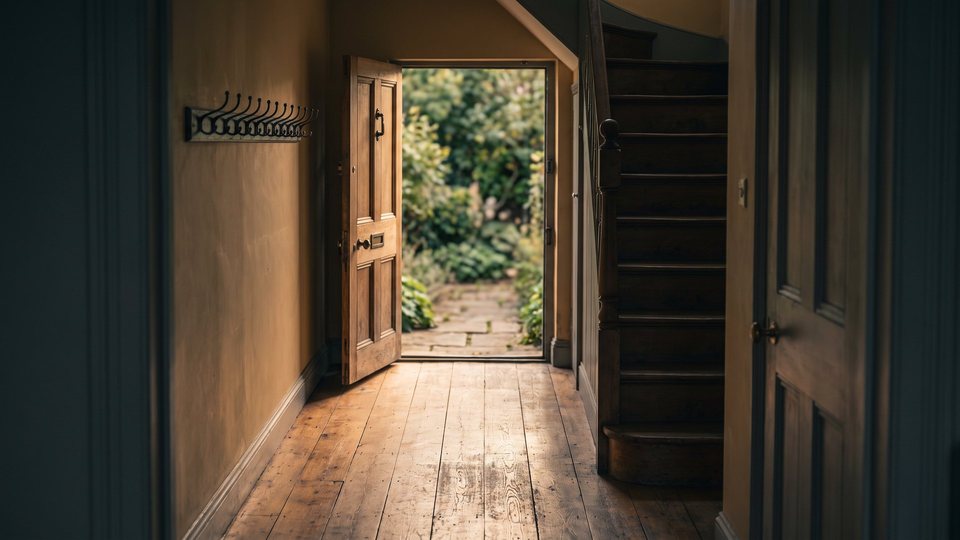
An impression of the landscape around Trier, generated with artificial intelligence. It shows neither a specific place nor a specific building and is not a photograph of one of our properties.
Article L-0104 · 09.10.2026 · 6 min read · Joé Christian Ewrard
Which structural features require particularly close inspection in Trier?
Very different types of buildings stand close together in Trier. Areas near the city centre feature older townhouses, narrow plots and buildings with shared access or closely adjoining properties. Other neighbourhoods are characterised by detached houses, estate houses, terraced houses or buildings on hillsides. The year of construction alone therefore reveals little. What matters is how the house was built, altered and maintained.
In older houses, basements and plinths deserve particular attention. A musty smell, fresh paint on individual sections of wall or freestanding dehumidifiers are not in themselves proof of damage. However, they are reasons to take a closer look. Moisture can come from the ground, defective pipes, inadequate waterproofing or insufficient ventilation. On sloping sites, hydrostatic pressure or intermittent water accumulation may be another possible cause.
Buyers should also inspect the roof, drainage, window connections, façade, heating system and visible pipes. In converted lofts, extensions or repurposed outbuildings, it is important to establish whether the building work was carried out professionally and the necessary permits are in place. An attractively renovated surface is no substitute for inspecting the load-bearing components and building services.
As part of our work in Trier, we have managed houses, apartments and commercial properties, among others. Houses in particular repeatedly demonstrate that obtaining professional building advice before making the final decision is usually more sensible than later debating who should have identified a defect.
How important are flooding, heavy rainfall and hillside locations?
For some properties in Trier, proximity to the Mosel must be considered directly as part of the risk assessment. Simply looking at the distance from the river is not enough. During flooding, groundwater, the sewer system and hydrostatic pressure may also play a role. The flood hazard maps in the [Geoportal of the City of Trier](https://www.trier.de/leben-in-trier/stadtportrait/geoinformationen/geoportal-trier-2d) should therefore be checked for the specific address.
Heavy rainfall needs to be considered separately. Water can collect in depressions or flow towards the building via roads, driveways and slopes. The city provides its own [information and hazard maps on heavy rainfall](https://www.trier.de/leben-in-trier/sicherheit/hochwasser-starkregen/4987.Starkregen.html) for this purpose. Such maps provide important guidance but do not replace an inspection of the property and its surroundings.
When considering houses on hillsides, buyers should pay attention to retaining walls, embankments, cracks, the gradient of the land and the drainage of surface water. Ask where rainwater flows, whether water has previously entered the building and what measures have been taken. Speaking to immediate neighbours can also be helpful. They often know how the basement, driveway and road are affected during prolonged rainfall.
It should also be established whether a backflow prevention device is installed and has been serviced regularly. If there are any noticeable issues, a suitably qualified expert should be consulted. Before the purchase agreement becomes binding, it is advisable to ask the insurer specifically about insurability and the scope of cover.
Does the neighbourhood really suit your everyday life?
The statement “in Trier” is too imprecise for a purchase decision. Routes and the feel of the area differ significantly between an address in the city centre and one in Trier-Nord, Trier-Süd, Kürenz, Olewig, Tarforst, Feyen, Ehrang, Biewer or Zewen. Even within the same district, the next parallel street may be considerably quieter, steeper or easier to reach.
You should therefore visit the surrounding area at different times of day. Pay attention to through traffic, parking availability, delivery traffic, outdoor dining areas, schools, sports facilities and railway lines. Particularly on major arterial roads and along heavily used transport routes, the impression gained during a quiet viewing appointment can be misleading. The noise maps in Trier’s Geoportal can help with the preliminary assessment.
In hillside locations, a short distance often looks straightforward on a map. On foot, with a pushchair, walking frame, bicycle or shopping bags, it may feel quite different. Test the route in person. This also applies to the route from the parking space to the house, outdoor steps and steep driveways.
Also look out from the house, not just inside it. What is opposite? Are there undeveloped areas, larger plots or commercially used areas? The current view may not remain unchanged permanently. Information on development plans and other planning-related matters can also be found in the Geoportal. If any questions remain unanswered, the relevant municipal department should be consulted.
Which routes should buyers test in advance?
The key factor is not the distance in kilometres, but a reliable door-to-door connection. Someone who works in the city centre needs a different location from someone who regularly travels to Luxemburg, towards Konz or into the Eifel. For commuters, access to the Moselle railway line, the route to the motorway or the journey through congested parts of the city can shape their daily routine.
Drive your typical commuting routes at the time when you would actually be travelling later. Do not check only the fastest route. Roadworks, heavy rush-hour traffic or a closed route can reveal whether a viable alternative is available. For commuters to Luxemburg, the location relative to the western side of the city and the actual access to the cross-border route are particularly relevant.
Anyone wishing to use buses or trains should check the stop, service frequency, connections and return journey. A network map shows connections, but not how pleasant the route is in the dark, in the rain or with luggage. The [Verkehrsverbund Region Trier](https://www.vrt-info.de/fahrt-planen/liniennetz) publishes current routes and connections.
Parking should also be included in the assessment of the location. Ask whether parking spaces legally belong to the property, are merely tolerated or are located on public land. A garage is not automatically suitable for every vehicle. Measure and test the access, door width and manoeuvring space before purchasing.
How can local amenities be assessed realistically?
Good access to amenities involves more than having a supermarket nearby. The facilities that suit your life are what matter: a pharmacy, medical care, childcare, a school, a bakery, parcel collection and options for daily shopping. Anyone who supports relatives or wishes to remain in the house in the long term should take barriers and distances particularly seriously.
Check whether these destinations can be reached on foot or whether a car is required for almost every errand. Also consider how everyday life would work if a vehicle were unavailable. In more densely developed areas, short distances can be an advantage. In outlying and elevated locations, houses often offer more peace and quiet or more land, but may require more organisation.
Amenities also include internet, mobile phone coverage and energy. Do not rely solely on general availability information. Have the specific address checked and ask about existing connections. When working from home, a mobile data backup should also be tested in practice, as reception may be weaker inside a building.
Which documents should be reviewed before deciding to buy?
Before making a binding decision, buyers should at least review the land register details, cadastral map, energy performance certificate, living and usable floor space details, floor plans, and documentation of significant alterations. For older houses or properties that have undergone multiple alterations, the building records can be particularly informative. Discrepancies between the plans and the actual property should not be dismissed on the assumption that it has always been that way.
The register of public building encumbrances is not the same as the land register. Listed-building protection, conservation requirements, rights of way, shared utility lines, or unclear access arrangements may also be important for the use and alteration of the property. Buyers should consult a notary or lawyer on legal matters. Tax implications should be discussed with a tax adviser.
In terms of price, even our own limited portfolio of properties in Trier shows a wide range. The purchase prices of 5 properties we handled ranged from 429.000 € to 975.000 €. This does not allow any conclusions to be drawn about the property market in Trier as a whole. However, it shows why living space and district alone do not provide a reliable valuation. The condition, plot, rights, need for modernisation, and immediate surroundings must be considered together.
As of 09.10.2026, we have handled a total of 8 properties in Trier, including 5 houses, 4 apartments, and 2 commercial properties. These properties received a total of 224 enquiries. Of these, 1 sale or rental has been verifiably completed. We currently have 1 listing in Trier: property 230, a commercial property with a purchase price of 750.000 €. This information relates exclusively to our own work and does not constitute general market statistics.
When assessing a house in Trier, do not begin by asking whether you will “get it”, but whether it is a sustainable fit for your everyday life and budget. Make a note of any outstanding points concerning the building structure, water, access routes, utilities, and documents, have any critical findings professionally assessed, and only then submit a binding offer.
Frequently Asked Questions
Should I always take a building surveyor with me before buying a house in Trier?
Professional assistance is particularly advisable for older houses, properties on slopes, visible damp, or major alterations. It cannot provide complete certainty, but it can put potential issues into context and identify where further inspections are needed. The surveyor should be selected independently.
Which documents should I request before making an offer?
Important documents include the land register details, cadastral map, energy performance certificate, floor plans, floor-space calculations, and documentation of alterations. Depending on the property, building records, information from the register of public building encumbrances, listed-building information, and maintenance records may also be required. Any outstanding documents should be expressly taken into account in the offer or purchase process.
Is a house near the Moselle automatically at risk of flooding?
No, proximity alone does not allow a reliable assessment. The specific plot, its elevation, potential flow paths, groundwater, and hydrostatic pressure are decisive. Check the official maps and have any unclear situations professionally assessed.
How can I tell whether a district of Trier suits my everyday life?
Test your commute, shopping options, public transport stops, and the parking situation at the times you would normally use them. Walk the routes as well and speak to neighbours. This will help you identify issues that may remain hidden during a single viewing.
Can I rely on information about living space and conversions?
The information should be checked against the plans, calculations, and the property as it actually stands. Converted attics, extensions, and repurposed rooms in particular warrant close attention. In the event of legal uncertainty, the building authority, a notary, or a lawyer can provide further assistance.
Topics: buying a house in Trier, buying property in Trier, inspecting the building structure, flooding in Trier, hillside locations in Trier, residential areas in Trier, estate agents in Trier
Responsible for this article: Joé Christian Ewrard — Owner & IHK-certified real estate agent, PRIOCASA Immobilien & Finanzservice. Last updated: 09.10.2026. The draft was created with the support of artificial intelligence and reviewed and approved before publication (AI Transparency). This post does not replace legal or tax advice; for individual questions, please contact a notary, lawyer, or tax advisor.
The next step
Are you currently searching?
Tell us what has to fit. We will contact you before a property goes online.
Fits well
Value & Price
Property prices in Trier: What determines the price
What determines property prices in Trier? Find out how location, condition and demand affect prices and how you can determine a realistic asking
Selling & Marketing
Selling a house in Trier: Process, price and timeframe
Selling a house in Trier: How to reliably prepare the price, documents, marketing, notary appointment and key handover without ti
Locations & Markets
Trier real estate market: Buy, sell, get advice
What is it like to live in Trier? Who is buying, who is selling? Reliable guidance for everyone looking for a property in Trier
All about homeListing
When you move in
Electricity, internet, and insurance for your own house can be arranged before the handover of the keys.
 Listing. The comparison is conducted by Verivox, not PRIOCASA. If a contract is concluded through this, we receive a commission — the price remains the same for you. Nothing is transmitted before you click; what happens afterwards is explained in our
Privacy Policy.
Listing. The comparison is conducted by Verivox, not PRIOCASA. If a contract is concluded through this, we receive a commission — the price remains the same for you. Nothing is transmitted before you click; what happens afterwards is explained in our
Privacy Policy.
The next step
One conversation is enough.
No marathon of forms, no waiting on hold. Call or write to us – you will speak directly with the people handling your request.