
Selling & Marketing
Selling a property in winter: What determines the price
Anyone looking to sell in winter often hears the same advice: Wait until spring. Yet the season alone rarely determines success or failure. More important are a realistic price, a compelling presentation and a sales process that gives prospective buyers confidence.
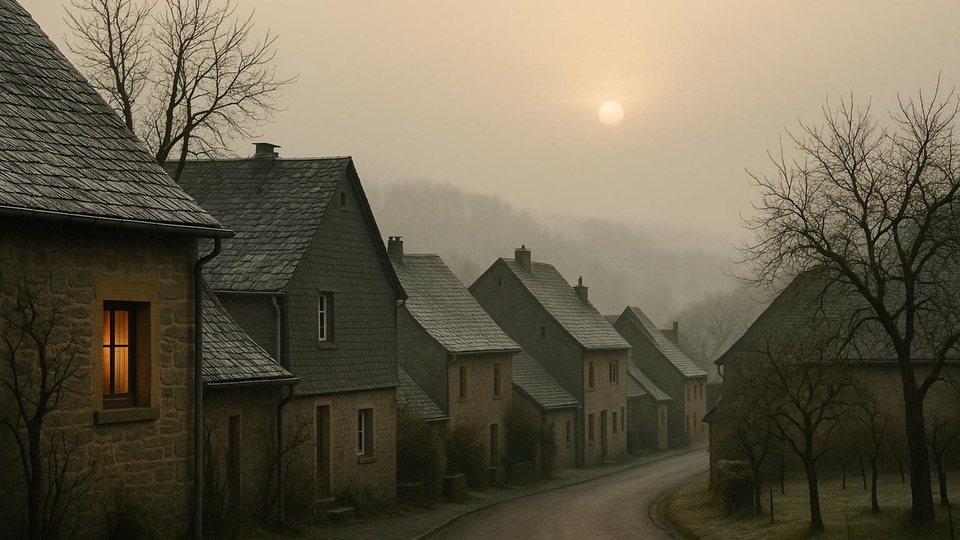
An impression relating to the subject, generated with artificial intelligence. It shows no specific building and is not a photograph of one of our properties.
Article L-0035 · 12.09.2026 · 6 min. reading time · Joé Christian Ewrard
Is winter really a bad time to sell?
Winter is considered a difficult time to sell because gardens are bare, the days end early and fewer people spontaneously plan viewings. This can quickly lead to the assumption that a property will inevitably have to remain on the market longer or be sold at a lower price in winter. It is not that simple.
Prospective buyers do not only search when the weather is pleasant. A change of job, a separation, a growing family, the desire to own a home or a change in financial circumstances do not follow the seasons. Anyone searching for a specific reason will also consider suitable properties in winter.
Moreover, the number of enquiries says little about their quality. In spring, more people may click on a listing. However, many of them may be casual browsers. In winter, there may sometimes be fewer enquiries, but they are more often from people with a clear need and more specific financing plans.
The right question is therefore not: Is winter or spring better? What matters is whether the property, the asking price and the marketing suit the current market and the target group.
Which factors actually determine the sale price?
The achievable price results from the interplay of location, plot, building, condition, legal framework and demand. The season can influence the presentation. However, it changes neither the layout nor the immediate surroundings, usability or need for modernisation.
The precise location is particularly important. Even within one town, quality of life and demand can vary significantly. Transport links, shopping facilities, schools, medical care, tranquillity, views and a location in a flood-risk area or on a slope have different effects. The distance to the workplace or the border may also be crucial for certain groups of buyers.
The characteristics of the house or apartment are also important. The living concept, energy efficiency, heating, windows, roof, parking spaces, outbuildings and potential follow-up costs influence the purchase decision. A well-maintained garden can attract interest. However, it does not compensate for an unsuitable layout or an unrealistic price.
Ultimately, a buyer does not pay for a season, but for the property's perceived benefits. The more clearly these benefits are presented and substantiated with transparent documentation, the stronger the price position will be.
What is particularly important in the Eifel, Trier and near the Luxembourg border?
The regional property market is not uniform. Prospective buyers assess a property in the Eifelkreis Bitburg-Prüm differently from a property in Trier, Trier-Saarburg or the Vulkaneifel. Even neighbouring towns can appeal to different groups of buyers.
In rural areas, mobility, internet connectivity, local amenities and the condition of larger plots often play an important role. In Trier, by contrast, commuting distances, the specific residential location, parking spaces and practicality for everyday life may be more prominent. Near the Luxembourg border, some buyers are particularly interested in the commuting distance and transport links. Others deliberately seek more living space and tranquillity outside the larger employment centres.
Winter can make regional characteristics even more apparent. Buyers can then see how accessible the driveway is, how bright the rooms are on an overcast day and whether the house feels comfortable. Damp, draughts or poorly usable outdoor paths are also less easy to overlook. This is not a disadvantage if the property is marketed openly and with thorough preparation.
A real estate agent with experience in the region should therefore be familiar with more than just comparable listings. They need to understand which target group is right for the property and what questions people ask about the specific location. A blanket statement such as “Everything sells better in spring” does not do justice to these differences.
How can a property be presented convincingly in winter?
Presentation requires greater care in winter. Rooms should be bright, tidy and kept at a comfortable temperature. Dirty entrance areas, overcrowded coat racks or dark hallways have a greater impact now than on a sunny spring day. However, warmth and light should not appear staged, but should convey a realistic impression of living in the property.
Good photos are particularly important. They should be taken on a suitable day and show the rooms clearly. If informative photos of the garden or exterior from another season are already available, they can be used as additional images. It must remain clear that the photos were taken at different times. A green summer photo must not obscure the current condition.
The property description should not romanticise the property artificially either. References to evenings by the fireplace are of little help when prospective buyers are looking for answers about the heating, energy consumption, modernisation work or running costs. Reliable information inspires more confidence than wintry language designed to create a particular mood.
Before a viewing, paths should be safe to walk on, outdoor lighting should be in working order and important areas should be accessible. The basement, boiler room, attic and garage all form part of the purchase decision. They should not be hidden behind stored items.
Why is an incorrect asking price more dangerous than the season?
Many owners worry about offering their property at too low a price. This concern is understandable. The house is often their largest asset and sometimes the result of decades of work. In the case of an inheritance, memories and differing expectations within the family are additional factors.
For fear of setting the price too low, the initial asking price is sometimes deliberately set high. The hope is that it can always be reduced later. This can weaken the marketing process. Suitable buyers often recognise early on when the price and the property's characteristics do not match. If they stay away, the listing loses attention over time. Subsequent price adjustments then raise additional questions.
A low price alone is not a strategy either. What matters is a transparent rationale that takes into account both the property's distinctive features and its weaknesses. Available comparable data, the location, condition and current competing listings should all be considered together.
Owners do not need a seemingly exact figure that creates a false sense of certainty. A well-founded price range and a clear marketing strategy are more useful. No one can guarantee the amount the market will accept. However, a careful valuation helps to avoid poor decisions.
Which documents and preparations prevent delays?
A buyer may be enthusiastic and still withdraw if documents are missing or important questions remain unanswered. Uncertainties can quickly arise, particularly with older houses: Were extensions approved? What modernisation work has been carried out? Are there any rights or encumbrances? Does the stated living space match the documents?
Before marketing begins, the property-related documents should therefore be checked and organised. These usually include documents relating to the plot, floor plans, areas, energy, the condition of the building and completed work. The documents required in each individual case depend on the property and the circumstances of the sale.
For inherited properties, multiple owners or an ongoing separation, it should also be clarified at an early stage who can make decisions and act with legal effect. Disagreement over the price, handover or inventory does not only put a strain on the family. It can also jeopardise a sale that is already at an advanced stage.
Legal and tax matters should be referred to a notary, lawyer or tax adviser. An estate agent can structure the process, coordinate documents and highlight points that clearly require clarification. They are not a substitute for individual legal or tax advice.
When does it make sense to wait and when does it not?
Waiting can make sense if the property is not yet ready for sale. Missing documents, unclear ownership, a serious maintenance issue or a conflict between co-owners should not be carried into the marketing process under time pressure. Better exterior photos can also be a valid reason to plan the launch carefully.
Waiting solely because of the calendar is less convincing. No one knows for certain how demand, financing options or competing listings will develop by spring. At the same time, a vacant property continues to involve work and expense. For occupied properties, a long period of uncertainty can also be stressful.
In practice, a clear-headed comparison helps: What exactly will improve by waiting? What costs, risks and personal burdens will arise in the meantime? Can the perceived disadvantage of winter be offset by professional photos, complete documentation and suitable viewing times?
The decision should suit your personal circumstances. Those under no time pressure can prepare the launch carefully. Those who need to sell or can already reach suitable prospective buyers do not need spring as permission.
If you are considering selling in winter, do not start by asking about the perfect month. First have the location, condition, documents and realistic price range assessed. For a property in Eifelkreis Bitburg-Prüm, Trier, Trier-Saarburg, the Vulkaneifel or on the Luxembourg border, PRIOCASA can then discuss with you whether launching soon makes sense and what preparation is still required.
Frequently Asked Questions
Does a house generally sell better in spring?
No. In spring, the property may look more attractive from the outside and receive more attention. Whether this results in a better sale depends primarily on the price, location, condition, target group and quality of the marketing.
Should I expect a lower sale price in winter?
There is no sound basis for applying a blanket winter discount. Buyers assess the property based on its characteristics and the available alternatives. An unrealistic asking price usually does more harm than cold or grey weather.
Should I wait until the garden is green again before listing the property?
This only makes sense if the property's exterior appearance is particularly important and there is no pressure to sell. Existing, authentic photos from another season can complement the winter presentation. Nevertheless, the current condition must remain transparent.
What should I do if defects become apparent during the viewing?
Known defects should not be hidden or played down. Explain objectively what is known and have any available documents ready. For legal questions about disclosure, you should seek advice from a notary or lawyer.
Can a buyer still pull out because of financing?
Yes, serious interest does not yet mean that financing is secured. Creditworthiness and financing status should therefore be checked appropriately before making far-reaching commitments or definitively turning away other prospective buyers. This check does not provide a guarantee either.
When should I engage an estate agent?
Support is particularly helpful when there is uncertainty about pricing, documents are missing, several owners are involved or you do not wish to manage enquiries and viewings yourself. An initial consultation should clarify which services are actually required and the rationale behind the proposed marketing approach.
Topics: selling property in winter, selling a house in the Eifel, estate agent Bitburg, property sale Trier, sale price, property marketing, Luxembourg border
Responsible for this post: Joé Christian Ewrard — Owner & Real Estate Agent IHK, PRIOCASA Immobilien & Finanzservice. Last updated: 12.09.2026. The draft was created with the support of artificial intelligence and was reviewed and approved before publication (AI Transparency). This post does not replace legal or tax advice; for individual questions, please contact a notary, lawyer, or tax advisor.
The next step
Are you considering a sale?
The first step is not a contract, but a number you can rely on.
Fits well
Selling & Marketing
Selling a house in Kordel: process, price and timeframe
Selling a house in Kordel: How to plan the price, documents, marketing, notary appointment and handover – clearly and realistically from the outset
Selling & Marketing
Selling a house in Konz: process, price and timeframe
Selling a house in Konz: Find out how to safely prepare the price, documents, marketing, notary appointment and handover, without un
Selling & Marketing
Selling a House in Hermeskeil: Process, Price and Timeframe
Selling a house in Hermeskeil: process, price, timeframe and handover clearly explained. This is how you avoid common mistakes and plan the nex
All about homeListing
What still needs to be arranged when moving out
Electricity, gas, and internet continue until someone transfers them. If you are changing the provider anyway, it’s best to compare right away.
 Listing. The comparison is conducted by Verivox, not PRIOCASA. If a contract is concluded through this, we receive a commission — the price remains the same for you. Nothing is transmitted before you click; what happens afterwards is explained in our
Privacy Policy.
Listing. The comparison is conducted by Verivox, not PRIOCASA. If a contract is concluded through this, we receive a commission — the price remains the same for you. Nothing is transmitted before you click; what happens afterwards is explained in our
Privacy Policy.
The next step
One conversation is enough.
No marathon of forms, no waiting on hold. Call or write to us – you will speak directly with the people handling your request.