
Eifel, Trier & Region
Living in the Eifel: What newcomers can really expect
The desire for peace and quiet, nature and a home of their own draws many people to the Eifel. In everyday life, however, it is not the view alone that matters, but whether travel distances, local amenities, the neighbourhood and winter conditions suit their lifestyle.
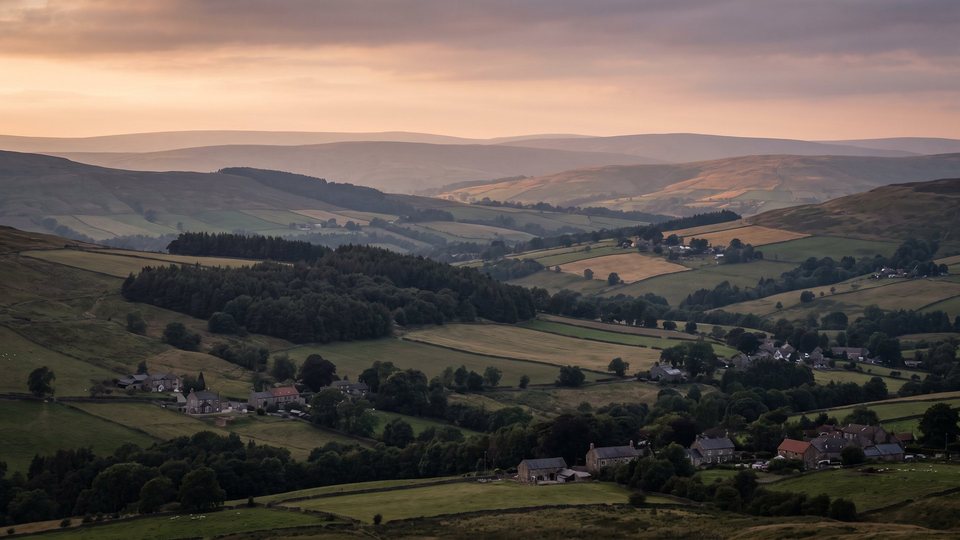
An impression relating to the subject, generated with artificial intelligence. It shows no specific building and is not a photograph of one of our properties.
Article L-0135 · 21.10.2026 · 7 min. read · Joé Christian Ewrard
Who Is Life in the Eifel Right For?
The Eifel suits people who value space and are prepared to organise their daily lives more consciously. Many things are quieter than in a major city. Properties feel more spacious, communities more manageable, and nature often begins close to your own front door. This can be a relief, especially if noise, traffic and cramped surroundings have previously been part of everyday life.
Peace and quiet do not automatically mean convenience, however. Anyone used to spontaneously choosing between several supermarkets, doctors, restaurants and leisure activities will need to adjust. Appointments, shopping and journeys require more planning. Some people find precisely this beneficial. Others only realise after moving how important short distances and a constant range of options were to them.
The key question is therefore not whether the Eifel is generally a good place to live. The more important question is: Does the specific location suit your daily routine? A house may be visually appealing yet still be in the wrong location if the commute, school, medical care or family commitments have not been taken into account.
Agency experience frequently shows that prospective buyers initially focus on living space, the garden and the view. Long-term satisfaction, however, often depends on less obvious factors: access in winter, the journey to childcare, a stable internet connection or the question of who will take care of the property as the owners grow older.
Travel Distances Are Part of the Buying Decision
In the Eifel, mobility quickly becomes part of the quality of life. Journeys between villages, smaller towns and regional centres can be winding, hilly and dependent on the time of day. A route that looks straightforward on the map can feel very different during rush hour, after dark or in winter.
In many locations, the car plays an important role. The practicality of public transport varies depending on the location. What matters is not only whether there is a stop. The timetable, connections and whether the service actually matches your working or school hours are crucial. Someone who works shifts or regularly commutes to Luxemburg early in the morning has different requirements from someone who works from home.
Everyday travel distances vary considerably across the Eifelkreis Bitburg-Prüm, the Vulkaneifel, Trier-Saarburg and the border region with Luxemburg. A village with good connections to Bitburg may be very suitable for a family, while a different location might make more sense for a workplace in Trier. Cross-border commuters must also consider how busy individual routes are during typical commuting hours.
You should therefore drive your most important routes yourself before making a purchase decision. Do so not only on a sunny afternoon, but, if possible, at the times when you would later be travelling. Also check alternative routes in case a road is closed or the weather makes the journey more difficult. This test drive is often more informative than any location description.
Local Amenities: Available Does Not Always Mean Convenient
Basic local amenities include more than a supermarket and a petrol station. For everyday life, a GP, pharmacy, childcare, school, physiotherapy, banking services, parcel collection and shopping facilities may be essential. Which services are important depends on your stage of life.
In smaller communities, many services are not located directly in the village, but in the nearest central town. This is quite manageable if the journeys fit into your daily routine. It becomes burdensome if every errand requires a separate trip or several family members need to use one vehicle at the same time.
Medical care should also be considered realistically. Do not just ask where a medical practice is located. Find out whether it is accepting new patients, how appointments are organised and what alternatives are available. If care or regular treatment is required, this issue becomes even more important.
A common mistake is to assume that today’s needs will remain unchanged. Young families should also consider potential journeys to school. Working people should assess what a change of workplace would mean. Anyone looking for a home for later life should ask whether stairs, property maintenance and necessary journeys will still be manageable in the future.
The Neighbourhood Is Closer Than the Size of the Property Suggests
Village life can be both private and community-oriented. Many people know one another, greet each other and notice changes. This creates a sense of security and makes it easier to settle in if you approach others openly. However, it may feel unfamiliar if you come from an anonymous urban neighbourhood.
Integration rarely happens automatically simply by purchasing a property. It begins with small gestures: a conversation over the garden fence, consideration regarding driveways and parking areas, or an interest in local life. No one has to join every club. However, anyone who consistently keeps their distance should not expect to be seen immediately as part of the community.
Before buying, it is worth speaking to the immediate neighbours. Ask objectively about daily life on the street, traffic, agricultural activity and recurring particularities. Such conversations are no substitute for a professional inspection of the property, but they provide a sense of whether the surroundings meet your expectations.
Rural life also includes tractors, livestock, church bells, woodcutting and seasonal activity. Anyone seeking peace and quiet should not expect complete silence. A village is not a holiday resort, but a place where people live and work.
Winter Changes Access Routes and Properties
Winters in the Eifel are shaped by location, elevation and weather patterns. Not every place experiences the same conditions. Nevertheless, buyers should take cold, wet weather, wind, fog, snow and icy conditions into account when making their decision. Steep access roads, shaded streets and properties where moisture lingers for a long time are particularly relevant.
If possible, do not view a house only in pleasant weather. Pay attention to how water drains from the property, whether outdoor steps could become slippery and how easily the parking space, garage and house entrance can be accessed. Also ask who clears the road and what obligations usually apply in front of your own property. The relevant local authority or a lawyer can provide binding legal information.
Winter also affects the building. Draughts, cold rooms, damp and high heating requirements are easily underestimated during a summer viewing. Have the heating system, insulation, roof and any noticeable signs of damp professionally inspected. An energy performance certificate provides important information, but is no substitute for a technical assessment of the property’s actual condition.
Commuters should have a plan for days when road conditions are difficult. Working from home can ease the situation, provided the employer, job and connection allow it. Families should consider how childcare and the journey to school will be organised if buses are delayed or a trip takes longer.
Test Internet and Mobile Reception on Site
A good digital connection is part of the basic infrastructure for many households. This applies to working from home, self-employment, streaming, accessing government services online and communicating with family or employers. General availability information is only an initial indication.
Check the connection available at the specific address. Ask what technology actually reaches the property and whether a connection is only available in principle or is already ready to use. Wherever possible, ask for statements to be confirmed in a verifiable form. Planned expansion is not the same as an existing connection.
Mobile phone reception can also vary within the same locality. Solid walls, locations in valleys and the orientation of the building can affect reception. You should therefore test it inside the property, in the garden and in the places where you intend to work or make phone calls later.
In practice, this issue is often only raised after the viewing. However, for people who regularly work from home, it should already be part of the initial selection process. An attractive secluded location can quickly lose its appeal if it is not possible to work there reliably.
Consider the House, Property and Everyday Life Together
Rural properties often come with more outdoor space, outbuildings or older building fabric. This can offer considerable possibilities. However, it also means upkeep, maintenance and decisions that do not arise with a flat in the city.
Ask yourself how much of the property you really want to use. A large garden is attractive as long as you have the time, energy and interest. Driveways, trees, hedges, drainage and outbuildings require attention. Anyone with significant work commitments or who travels frequently should not romanticise the effort involved.
In older houses, modernisation is often not merely a matter of design. Heating, electrics, windows, the roof, damp and the property's energy performance can determine the order in which work needs to be carried out. If you are unsure, consult an independent expert or suitable specialist contractors. Tax and legal matters should be handled by a tax adviser, notary or lawyer.
You should also consider more than just the purchase price. Day-to-day life after the purchase includes mobility, energy, maintenance and possible work on the property. No one should hastily derive an overall budget from individual observations without a reliable assessment.
How to Check Whether a Location Is Really Right for You
Do not begin by asking which house is the most attractive. First, write down what needs to work reliably in your everyday life. This includes journeys to work, care arrangements, medical appointments, shopping, leisure activities, visits to relatives and caring for children or pets.
Visit the locality at different times of day. Walk along the street. Listen carefully. Observe the traffic, light, smells and how neighbouring properties are used. Ask yourself whether the locality would also suit you on a wet weekday, not just during a relaxed viewing.
Speak openly about possible changes. What happens if working from home is no longer possible, a child changes schools or a family member can no longer drive themselves? Questions like these are not intended to cause anxiety. They protect you from making a decision that only works for your current stage of life.
A locally active estate agent can help you assess locations and ask the right questions. However, they can neither determine your priorities nor replace specialist technical, legal or tax advice. Good guidance brings conflicting priorities to light instead of playing them down.
If you are considering moving to the Eifel, first select a few suitable localities and test what your everyday life would actually be like there. Travel the most important routes, check local amenities and connections, speak to residents and view the property with every season in mind. For guidance on the Eifelkreis Bitburg-Prüm, Trier and Trier-Saarburg, the Vulkaneifel or the border with Luxemburg, a no-obligation initial consultation with a regionally experienced estate agent could be the next small step.
Frequently Asked Questions
Do I definitely need a car in the Eifel?
That depends on the specific location, your commute and your circumstances. In many rural areas, a car makes everyday life considerably easier. Check public transport connections based on the times you would actually travel, rather than simply whether there is a nearby stop.
Is life in an Eifel village lonely?
It can be quiet, but it does not have to be lonely. Many places have an active neighbourhood and a vibrant community life. It is usually easier to make connections if you are open and show an interest in the local community.
How can I find out whether the local amenities are sufficient?
Make a note of all the journeys your household regularly needs to make and check them for the specific address. Contact important medical practices, care services or service providers directly. Maps and directories do not always show whether a service is actually available.
What should I look out for with a house during an Eifel winter?
Important factors include access, drainage, damp, heating, insulation and safe paths to the entrance. If possible, view the property in different weather conditions and have any technical issues assessed by a professional. Clarify any questions about snow-clearing and gritting obligations with the municipality or a lawyer.
Is the Eifel suitable for cross-border commuters travelling to Luxembourg?
Many places are generally suitable, but the right location depends on your workplace, working hours and route. Test the journey at realistic commuting times and take alternative routes into account. A beautiful house alone rarely compensates for a permanently stressful commute.
Topics: living in the Eifel, moving to the Eifel, homes in the Eifel, Eifelkreis Bitburg-Prüm, Trier and the region, Luxembourg border, buying a house in the Eifel
Responsible for this article: Joé Christian Ewrard — agency owner & Real Estate Agent IHK, PRIOCASA Immobilien & Finanzservice. Last updated: 21.10.2026. The draft was created with the support of artificial intelligence and reviewed and approved before publication (AI Transparency). This post does not replace legal or tax advice; for individual questions, please contact a notary, lawyer, or tax advisor.
The next step
How is your location currently positioned?
Local knowledge is not incidental when determining the price. Ask us about your street.
Fits well
Eifel, Trier & Region
Overview of the property market in Eifelkreis Bitburg-Prüm
How supply, demand and property sales work in Eifelkreis Bitburg-Prüm – with clear guidance for owners, buyers and F
Value & Price
Property prices in Konz: What determines the price
What determines property prices in Konz? Find out how location, condition and demand affect prices and how to set a realistic asking pri
Selling & Marketing
Selling a house in Konz: process, price and timeframe
Selling a house in Konz: Find out how to safely prepare the price, documents, marketing, notary appointment and handover, without un
All about homeListing
What is different at a new address
Network charges, the level of infrastructure development and the regional classification depend on the location, not the provider.
 Listing. The comparison is conducted by Verivox, not PRIOCASA. If a contract is concluded through this, we receive a commission — the price remains the same for you. Nothing is transmitted before you click; what happens afterwards is explained in our
Privacy Policy.
The next step
One conversation is enough.
No marathon of forms, no waiting on hold. Call or write to us – you will speak directly with the people handling your request.