
Selling & Marketing
Selling a house in need of renovation: the honest approach
Selling a house in need of renovation often feels more difficult than it actually is. Many owners fear receiving too low a price, facing critical questions or having a buyer withdraw shortly before the notary appointment. The most reliable approach is marketing that does not gloss over anything while still highlighting the property's value.
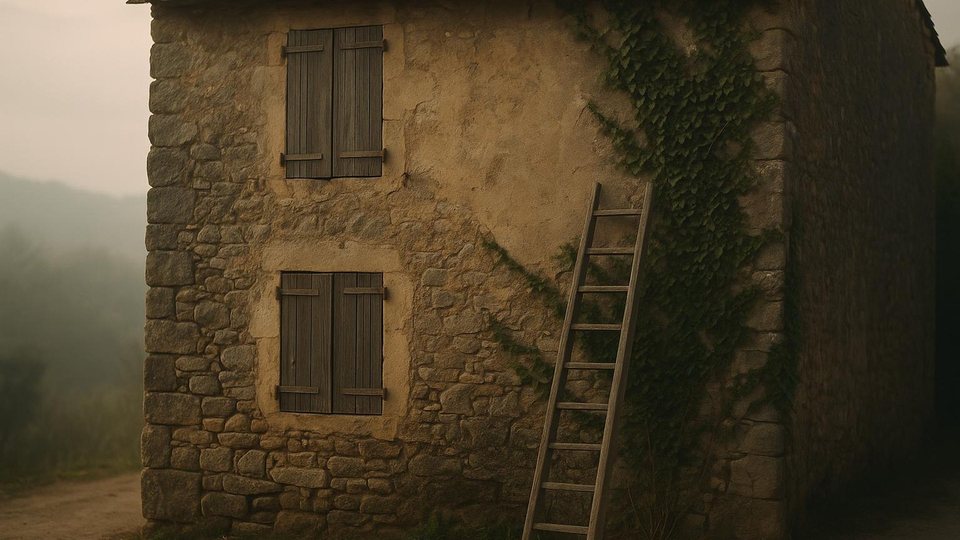
An impression relating to the subject, generated with artificial intelligence. It shows no specific building and is not a photograph of one of our properties.
Article L-0027 · 09.09.2026 · 7 min read · Joé Christian Ewrard
Why openness makes selling easier
Prospective buyers usually notice quickly during a viewing that a house needs work. Old windows, an outdated heating system, signs of damp or electrical installations from past decades cannot be convincingly concealed. If an attempt is nevertheless made to play down weaknesses, this creates mistrust. The buyer then no longer wonders only about what is visible. They suspect further problems.
Openness does not mean talking the house down. It means explaining its condition clearly. Wording such as “The building offers a solid foundation but requires comprehensive technical and energy-efficiency upgrades” is more honest and helpful than a generic “house with potential”. This allows prospective buyers to decide sooner whether the property suits their financial means and plans.
This also protects the sales process. Anyone who only learns during the viewing that the roof should be inspected or the heating system needs replacing will often be disappointed. Anyone who is already aware of these points from the property brochure arrives with more realistic expectations. Such prospective buyers are often better prepared and can ask more specific questions.
In practice, not every defect is equally problematic for every buyer. An owner-occupier without renovation experience may view outdated building services as a major risk. A tradesperson, architect or experienced property investor is more likely to see the same condition as a manageable project. Honest information therefore does not deter everyone. It identifies the target group.
Which defects need to be disclosed?
All known circumstances that could be material to the purchase decision should be disclosed. These include visible damage as well as known problems that are not immediately apparent during a standard viewing. Typical examples include damp, recurring mould, roof damage, problems with pipes, electrical installations that no longer meet modern standards or known restrictions on use.
It is essential to distinguish between knowledge and assumption. If the cause of a damp area in the basement has not been professionally established, it should not be diagnosed independently. Instead of “The external waterproofing is defective”, the appropriate factual statement would be: “There are signs of damp on this basement wall. The cause has not yet been investigated by a specialist company.” This is precise without making an unsubstantiated claim.
Previous work should also be presented in a transparent manner. If damage has been repaired, invoices, photos or reports are helpful. If documentation is unavailable, this should also be stated openly. Uncertainty cannot be eliminated through definitive wording. However, it can be presented in a way that allows a buyer to take it into account during their inspection.
If owners are uncertain about legally relevant disclosure obligations, they should consult a notary or lawyer. An estate agent can explain the usual process, organise documents and include known facts in the marketing materials. This does not replace individual legal advice.
Which documents build trust?
For houses in need of renovation, well-organized documentation is particularly valuable. It helps prospective buyers assess the condition based on more than just their first impression. Building plans, floor plans, floor area details, permits, invoices for previous work and information about the building services together provide a clearer picture.
It is also important to examine alterations critically. Particularly in older houses, attics may have been converted, outbuildings repurposed or extensions built without the current owners having all the relevant documents. This does not automatically mean that anything is unlawful. However, it is an issue that should be clarified before the property is marketed. The relevant authorities, architects or other specialists can provide assistance.
An energy performance certificate is also among the documents that must be prepared for many property sales. The requirements or exemptions applicable in the specific case should be assessed by a specialist. For questions regarding compliance with building regulations, funding opportunities or tax implications, the relevant professional advisers are the appropriate contacts.
Missing documents are no reason to postpone the sale until every detail has been clarified. However, they should not be concealed. A well-maintained data room containing the available documents, outstanding questions and subsequently submitted evidence provides greater reassurance than an apparently complete property brochure whose information later has to be corrected.
Who buys a house in need of renovation?
The appropriate target group depends more on the property than on the label “in need of renovation.” A house with a large plot appeals to different people than a small town house. A former farmhouse requires different skills and ideas than a residential property where primarily the building services and fittings need to be replaced.
Potential buyers include owner-occupiers with building experience, families with a long-term renovation plan, property developers or investors. People who wish to preserve distinctive architecture may also be suitable buyers. The key is that the property brochure should not try to appeal to everyone. It should indicate which uses are conceivable and which checks are still required.
In the Eifelkreis Bitburg-Prüm, the Vulkaneifel and parts of Trier-Saarburg, estate agents regularly encounter older residential properties with outbuildings, large plots or alterations dating from several construction phases. In these cases, more than just living space and fittings must be considered. Access, distances, outbuildings, plot maintenance and potential uses may be equally important to buyers.
Along the border with Luxemburg, there is an additional perspective. Prospective buyers may organize their working lives across the border and therefore have different requirements regarding location, transport connections or space for working from home. This does not automatically mean that they are willing to pay more. These buyers also carefully compare the condition, overall risk and anticipated work involved.
How is a realistic asking price determined?
The price of a house in need of renovation cannot be calculated simply by deducting a flat renovation amount from an assumed value. Buildings, defects and buyers’ plans differ too greatly for this. Furthermore, every renovation involves uncertainties that prospective buyers factor into their decision.
The starting point is the value fundamentally supported by the location, plot, building type, potential uses and demand. The next consideration is how significantly the current condition restricts the pool of potential buyers. A house that is immediately habitable and can be modernized gradually will be valued differently from a building that requires extensive work before anyone can move in.
Reliable comparable properties are helpful. The prices at which similar houses were offered are not the only relevant factor. Asking prices reflect expectations, not necessarily the purchase prices actually agreed. It must also be assessed whether the location, plot, quality of accommodation and extent of the renovation required are truly comparable.
Owners sometimes underestimate the buyer's overall perspective. Buyers do not only consider the purchase price. They also take into account financing, reserves, specialist contractors, potential surprises and the burden of the renovation work. An unrealistically high asking price therefore rarely leads to an objective negotiation. It often results in suitable prospective buyers not even taking a closer look at the property.
However, setting the price too low is not a good strategy either. It can result in an unnecessary loss of assets and arouse suspicion. A transparent valuation that distinguishes between opportunities and risks is advisable. Where technical issues could significantly affect the value, an assessment by building experts or specialist contractors can improve the pricing process.
What does honest marketing look like?
Good marketing presents the house as it is. Bright, tidy rooms and clear photos are beneficial. Retouching that makes damage disappear is not. Photos should also be taken of areas that clearly illustrate the need for renovation. Prospective buyers need an overall picture, not a surprise during the viewing.
The property brochure should distinguish between the current condition, potential and unverified ideas. “The attic could provide additional space” sounds appealing, but must not give the impression that the conversion has already been approved. It is better to point out that any potential use depends on the structural conditions and the necessary approvals.
The language used also determines the quality of enquiries. Terms such as “bargain”, “dream home for DIY enthusiasts” or “requiring just a few minor improvements” lack credibility when extensive work is clearly required. Factual information is more likely to lead to conversations with people who can realistically assess the project.
A good property brochure answers the initial critical questions without purporting to be a technical assessment. What is known? What documents are available? Which areas have not yet been inspected? What features make the property attractive despite the work involved? This clarity gives prospective buyers a basis for their own assessment.
What happens during viewings and negotiations?
Known shortcomings should be documented internally before a viewing. This ensures that all prospective buyers receive the same key information. Conflicting statements from the owner and the estate agent quickly lead to uncertainty, even if they are merely due to lapses in memory.
During the appointment, a prospective buyer must be allowed to take a close look. If they are seriously interested in buying, they should be given the opportunity to bring in suitable specialists. This may extend the process, but it is more likely to prevent fundamental doubts from arising shortly before the notary appointment.
Price negotiations for properties in need of renovation are often based on anticipated work. Not every figure quoted is automatically plausible. Instead of arguing over off-the-cuff estimates, it should be clarified which findings are substantiated and which merely relate to personal preferences regarding fixtures and finishes. An old bathroom, for example, is not the same as a technical defect.
Before the notary appointment, commitments, known special circumstances and documents provided should be properly consolidated. The notary draws up the purchase agreement and answers questions concerning the notarisation. A lawyer should also be consulted regarding legal risks, and a tax adviser regarding tax matters.
If you wish to sell a house in need of renovation, do not begin with appealing wording, but with an assessment of its current condition. Gather the documents, note any known defects and unresolved issues, and then have the target audience and asking price assessed by a professional. PRIOCASA can assist you with this in the Eifelkreis Bitburg-Prüm, in Trier and Trier-Saarburg, in the Vulkaneifel and along the border with Luxemburg, without downplaying the condition or promising a particular outcome.
Frequently Asked Questions
Do I have to mention every minor defect in the property brochure?
Not every sign of wear and tear requires a detailed description. However, known circumstances that may be material to the purchase decision should be addressed transparently. If there is any doubt about the legal disclosure requirements, it is advisable to consult a notary or lawyer.
Should I renovate before selling?
That depends on whether the work improves the overall impression or merely conceals a defect. Tidying up, cleaning and completing small unfinished jobs can be helpful. Larger investments should only be commissioned after a financial and professional assessment.
Do I need a survey?
A survey is not required for every property sale. However, in the case of unclear damage, unusual buildings or significant uncertainty, a professional assessment can inspire confidence and make it easier to determine the price. The appropriate type of inspection depends on the property.
Can a house in need of renovation only be sold to investors?
No. Owner-occupiers also specifically look for houses that they can develop according to their own ideas. The location, purchase price, work involved and personal circumstances must be compatible.
What happens if the buyer finds further damage after the viewing?
New findings should be documented and discussed openly. It can then be determined whether further inspections are necessary and whether the price expectations need to be reassessed. Any legal consequences should be clarified with a notary or lawyer.
Topics: selling a house in need of renovation, selling a house in the Eifel, estate agent Bitburg, estate agent Trier, disclosing defects, property valuation, asking price, house in need of renovation
Responsible for this post: Joé Christian Ewrard — Owner & Real Estate Agent IHK, PRIOCASA Immobilien & Finanzservice. Last updated: 09.09.2026. The draft was created with the support of artificial intelligence and reviewed and approved before publication (AI Transparency). This post does not replace legal or tax advice; for individual questions, please contact a notary, lawyer, or tax advisor.
The next step
Are you considering a sale?
The first step is not a contract, but a number you can rely on.
Fits well
Selling & Marketing
Selling a house in Konz: process, price and timeframe
Selling a house in Konz: Find out how to safely prepare the price, documents, marketing, notary appointment and handover, without un
Selling & Marketing
Selling a House in Hermeskeil: Process, Price and Timeframe
Selling a house in Hermeskeil: process, price, timeframe and handover clearly explained. This is how you avoid common mistakes and plan the nex
Selling & Marketing
Selling a house in Trier: Process, price and timeframe
Selling a house in Trier: How to reliably prepare the price, documents, marketing, notary appointment and key handover without ti
All about homeListing
What still needs to be arranged when moving out
Electricity, gas, and internet continue until someone transfers them. If you are changing the provider anyway, it’s best to compare right away.
 Listing. The comparison is conducted by Verivox, not PRIOCASA. If a contract is concluded through this, we receive a commission — the price remains the same for you. Nothing is transmitted before you click; what happens afterwards is explained in our
Privacy Policy.
Listing. The comparison is conducted by Verivox, not PRIOCASA. If a contract is concluded through this, we receive a commission — the price remains the same for you. Nothing is transmitted before you click; what happens afterwards is explained in our
Privacy Policy.
The next step
One conversation is enough.
No marathon of forms, no waiting on hold. Call or write to us – you will speak directly with the people handling your request.