
Eifel, Trier & Region
Village house instead of a city apartment: Moving to the Eifel
More space, a garden of your own and peace and quiet on your doorstep can be very appealing. But a country house changes not only your living space, but also your daily routine, travel and responsibilities. By taking a close look before moving to the Eifel, you can better assess whether the new lifestyle truly matches your expectations.
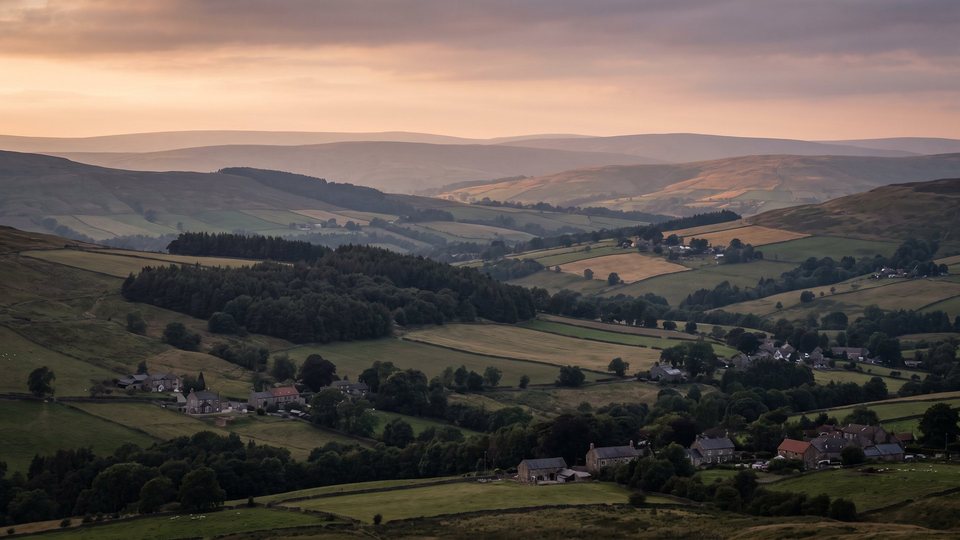
An impression relating to the subject, generated with artificial intelligence. It shows no specific building and is not a photograph of one of our properties.
Article L-0139 · 22.10.2026 · 6 min. reading time · Joé Christian Ewrard
What do you gain from a country house?
The most obvious benefit is space. A country house often offers more living space, ancillary areas, storage options and land than a city apartment. This creates freedoms that are difficult to find in the city: a home office, space for guests, a workshop, a kitchen garden or a sheltered area for children and pets.
However, this space is not automatically an advantage. Every room needs to be heated, ventilated, cleaned and eventually renovated. An outbuilding can be useful, but may also come with a damaged roof, damp walls or old utility lines. A large garden offers quality of life, but also requires regular maintenance.
The key question, therefore, is not how much space you are getting. What matters more is how much of that space you will actually use. A vacant floor or unused barn may look spacious in the property listing but mainly create work in everyday life.
Consultations often reveal that buyers initially focus on the living space and regard outbuildings as a free extra. During the viewing, every part of the property should therefore be assessed as a separate area of responsibility. For every room and outdoor area, ask yourself: What do I need this for, and who will take care of it?
What costs are there beyond the purchase price?
The purchase price is only the most visible part of the overall cost. There are also the ancillary purchase costs and ongoing expenses for energy, insurance, charges, maintenance and repairs. The actual financial burden depends on the building, the land, the technical equipment and how you intend to use it.
With older country houses, particular attention should be paid to the roof, façade, windows, heating system, electrical system, water pipes, damp and drainage. Driveways, retaining walls, fencing and outbuildings may also incur costs later. A lower purchase price does not automatically offset these expenses.
Ask to see the available documents and, if you are unsure, bring an independent surveyor with you. A viewing in daylight is just as important as inspecting the basement, attic and outbuildings. Odours, discolouration, makeshift wiring or recently covered sections of wall warrant objective questions.
In addition, do not budget only for work that is already known. A house requires financial reserves for issues that are not yet visible today. The appropriate reserve for your property should be discussed individually with experts and your financing partner. Tax matters should be left to a tax adviser, and legal matters to a notary or lawyer.
How much time does life with more space require?
A country house requires not only capital, but also time. Depending on the property, lawns, hedges, leaves, snow, minor repairs and maintaining the courtyard or driveway are part of everyday life. Those who enjoy doing DIY may find it a welcome change. Those who already have little free time may find the same tasks burdensome.
An honest allocation of responsibilities is particularly important. Who will take care of the garden? Who will arrange for tradespeople? Who will respond if the heating fails or water enters an adjoining room? The phrase “We’ll deal with that later” does not resolve these questions.
Conflicts often arise not because of the house itself, but because of differing expectations. One person dreams of the garden, while the other sees the additional work. One wants to renovate, while the other wants to move in as quickly as possible. Before buying, discuss what level of DIY work is realistic for everyone involved.
Age and possible future changes should also be taken into consideration. Stairs, a steep garden or long distances between the parking space and the front door may not be a problem today but could become an issue later. A good village house does not just suit your current needs; it can also be adapted to changing stages of life.
What does mobility mean in everyday life?
In a village, quality of life depends heavily on the journeys you make every day. Do not just consider the distance to your workplace. Shopping, school, childcare, doctors, pharmacies, leisure activities and support for relatives are also relevant.
A car may be more important in everyday rural life. In a household with different work and school schedules, the question therefore arises as to how many journeys need to be coordinated at the same time. Teenagers, older family members and people without a driving licence should also be included in these considerations.
In the Eifelkreis Bitburg-Prüm, the Vulkaneifel, Trier-Saarburg and along the border with Luxemburg, journey times vary considerably from place to place. A house near Bitburg may have very different transport links for everyday life than a property in a remote Eifel village. For commuters travelling to Trier or Luxemburg, it is not just the number of kilometres that matters, but the actual route, possible bottlenecks and the strain at typical travel times.
Before buying, drive the important routes yourself. If possible, do so at the times when you would later be travelling. A map shows distances. It does not show how a journey feels after a long day at work, in bad weather or with several appointments one after another.
How does the village community change your life?
In a city apartment, relationships with neighbours often remain non-committal. In a village, people are more aware of newcomers. This can provide a sense of security, support and belonging. However, it may also feel unfamiliar if you are used to a high degree of anonymity.
A sense of community does not develop automatically. A friendly greeting, a brief conversation at the garden fence or an interest in local activities can make it easier to settle in. You do not have to take part in everything. Reliability and respectful interaction are usually more important than being constantly present.
At the same time, you should consider what peace and quiet means to you personally. Church bells, agricultural vehicles, animals, club activities and seasonal work are part of everyday life in many places. Rural tranquillity does not mean complete silence.
You should therefore visit the village several times. Walk through the streets, explore the surrounding area and, if the opportunity arises, speak to people in the neighbourhood. Such impressions are no substitute for inspecting the property, but they can indicate whether you might feel comfortable there as a resident rather than merely as a visitor.
What typical mistakes should buyers avoid?
A common mistake is to compare only the house and the plot. A less expensive village house can prove more financially demanding than expected due to transport, renovation and ongoing maintenance costs. Conversely, higher expenditure may be entirely reasonable if the property is a perfect fit for your life plans. The calculations must suit the household, not a general notion of country living.
The so-called barn bonus is also problematic. Large outbuildings appear attractive, even though it is not yet clear whether they are structurally suitable and how they may be used. Anyone planning a conversion should clarify at an early stage with the relevant authority and qualified planners what is possible. Statements from neighbours or previous owners are no substitute for a binding assessment.
Another mistake is to assess modernisation work solely on the basis of visible surfaces. A new bathroom says little about the plumbing, insulation or heating technology. Conversely, an old-fashioned kitchen is not automatically a serious defect. Distinguish between matters of taste, immediate repair needs and long-term modernisation.
Moreover, do not let the fear of losing the property drive you. Making a purchase decision under internal pressure increases the risk of overlooking key questions. A reputable estate agent explains the process, provides available documents and identifies uncertainties. However, they cannot guarantee a specific price, a fixed sales period or that the house will remain free of defects.
How do you check whether the move is right for you?
Start with your everyday life, not with property portals. Write down which journeys you make regularly, how you spend your free time and which responsibilities you want to take on permanently. Take into account everyone who will be living in the house.
You can then define your requirements for the location and the building. Do you really need a large garden, or would a manageable terrace be enough? Is an outbuilding necessary? Does a home office need to be quiet and have good technical connectivity? Which rooms should be accessible without stairs?
Also check the digital infrastructure for the specific address. General statements about a location are not sufficient if you work from home or depend on a stable connection. Also ask about the energy and water supply, drainage, access and any potential rights or obligations relating to the property.
Regional property advice can help reconcile your wishes with your everyday life. Particularly between Bitburg, Trier, Trier-Saarburg, the Vulkaneifel and the Luxembourg border, local knowledge and a realistic assessment of travel distances are important. The aim should not be to get you into a house as quickly as possible. The aim is a decision that will still make sense to you after you have moved in.
If you are considering a village house, first prepare a personal assessment of your everyday life based on space, maintenance, travel, reserves and your desired level of community. Then arrange targeted viewings and bring any outstanding questions about technical matters, financing and use to the appointment. PRIOCASA can help you assess the regional context and make the next step manageable; the relevant specialists should examine individual technical, legal and tax matters.
Frequently Asked Questions
Is a village house in the Eifel automatically cheaper than a city apartment?
There is no general answer to that. In addition to the purchase price, the condition, renovation needs, ongoing costs, mobility and time commitment all matter. Therefore, compare the overall burden, not just the asking price.
How can I identify hidden follow-up costs during a viewing?
Pay particular attention to the roof, damp, heating, windows, plumbing, drainage and outbuildings. Request any available documents and, if in doubt, consult an independent expert. A standard viewing is no substitute for a technical inspection.
Is village life suitable for commuters travelling to Trier or Luxembourg?
That depends on the exact location, working hours and your personal resilience. Travel the route at realistic times and take other household journeys into account. Distance alone says little about what everyday life will be like later.
Can I simply convert a barn into living space?
Not without prior checks. Building regulations, permits, utility connections, fire safety and other requirements may play a role. Discuss the project with the relevant authority and suitable specialist planners; if you have legal questions, you should consult a lawyer or notary.
How can I find out whether the village community is right for me?
Visit the area at different times and explore it on foot. Pay attention to everyday noise, traffic, meeting places and how people interact with one another. Brief contact with the neighbours can be more honest than any description of the area.
Topics: Moving to the Eifel, buying a village house, Eifel property, country living, property in Trier, Bitburg-Prüm, Luxemburg border
Responsible for this article: Joé Christian Ewrard — agency owner & Real Estate Agent IHK, PRIOCASA Immobilien & Finanzservice. As at: 22.10.2026. The draft was created with the assistance of artificial intelligence and was reviewed and approved before publication (AI Transparency). This post does not replace legal or tax advice; for individual questions, please contact a notary, lawyer, or tax advisor.
The next step
How is your location currently positioned?
Local knowledge is not incidental when determining the price. Ask us about your street.
Fits well
Eifel, Trier & Region
Trier and surrounding area: Why prices fall with every kilometre
Why do property prices fall with increasing distance from Trier? Find out how location, transport links and everyday life affect the purchase price in the surrounding area de
Eifel, Trier & Region
Living in the Eifel: What newcomers can really expect
What is it really like to live in the Eifel? An honest guide to travel distances, neighbourhood, amenities and winter for people who ei
Eifel, Trier & Region
Overview of the property market in Eifelkreis Bitburg-Prüm
How supply, demand and property sales work in Eifelkreis Bitburg-Prüm – with clear guidance for owners, buyers and F
All about homeListing
What is different at a new address
Network charges, the level of infrastructure development and the regional classification depend on the location, not the provider.
 Listing. The comparison is conducted by Verivox, not PRIOCASA. If a contract is concluded through this, we receive a commission — the price remains the same for you. Nothing is transmitted before you click; what happens afterwards is explained in our
Privacy Policy.
The next step
One conversation is enough.
No marathon of forms, no waiting on hold. Call or write to us – you will speak directly with the people handling your request.